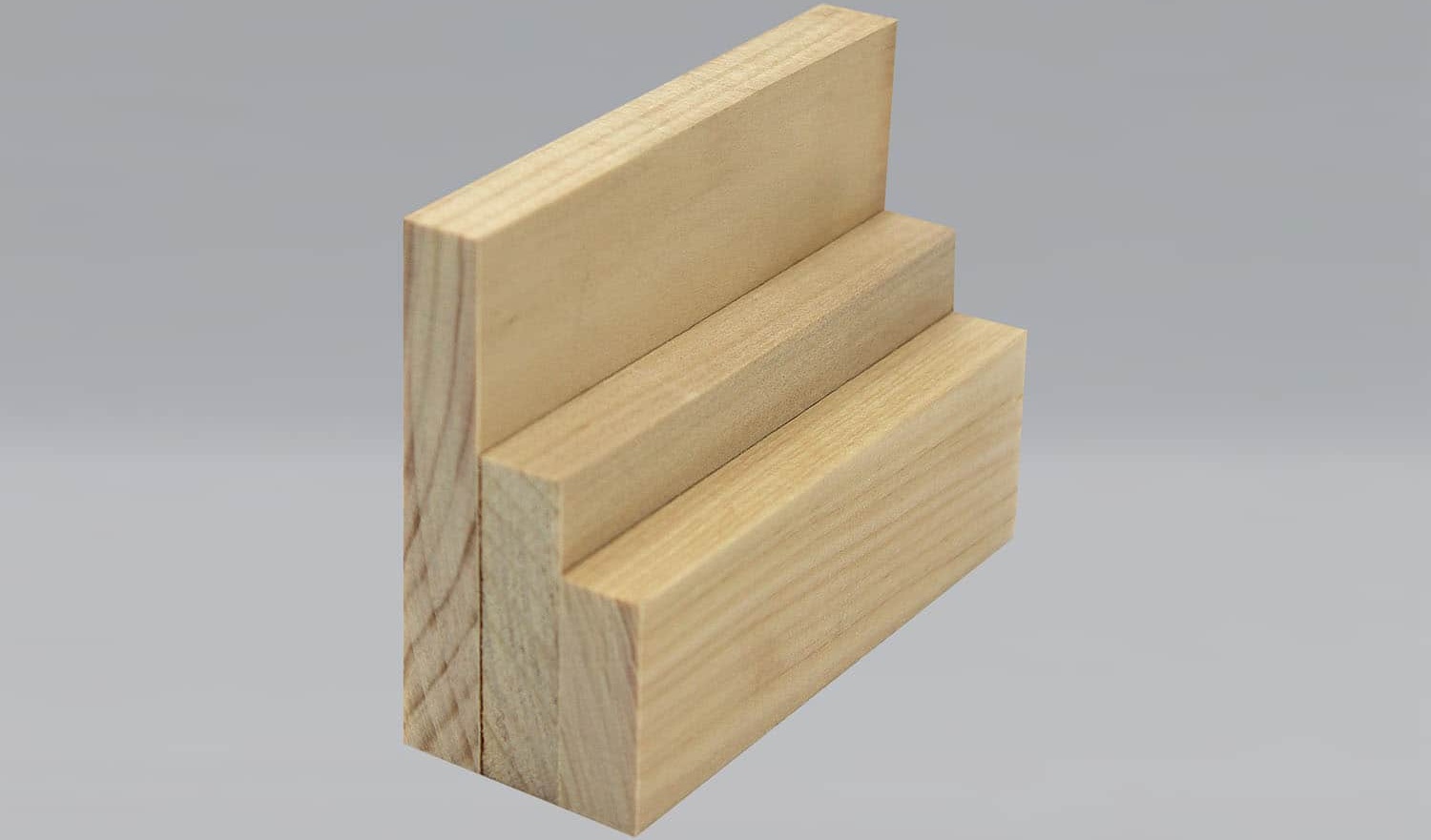
Some jobs call for a moulding that stays out of the way rather than becoming a feature in itself. Colonial Wall Linings‘ Square Dressed Timber Moulding is that option: a flat, straight-edged profile in finger-jointed pine, sized for skirting, architraves and general trim work across interior projects, whether you’re a builder fitting out a new home, a builder working on a new project or a renovator updating an existing interior.
Use the < > keys below to scroll through the images:
Finger Jointed Pine Mouldings – Square Dressed Timber Moulding – Size Chart:
| SIZE | CODE |
|---|---|
| 18 x 18 | RAPM04230BS (Beaded Scotia) |
| 42 x 18 | RAPM03030SCO (Scotia) |
| 66 x 18 | RAPM06618SQ |
| 90 x 18 | RAPM09018SQ |
| 112 x 18 | RAPM11218SQ |
| 116 x 18 | RAPM11618SQ |
| 138 x 18 | RAPM13818SQ |
| 31 x 11 | RAPM03111SQ |
| 42 x 11 | RAPM04211SQ |
| 66 x 11 | RAPM06611SQ |
Square Timber Mouldings Without the Extra Detail
Square Dressed moulding has no curve, bead, or raised line running along it. That’s the point of it. Where other profiles are chosen for the shape they add to a room, this one is chosen for the opposite reason: it holds a flat, even face that lets walls, floors and joinery do the talking instead.
It’s manufactured from finger-jointed pine (FJ pine), which uses shorter sections of timber joined together to create longer, consistent lengths. That process gives each length a consistent, predictable straightness from one end to the other. Alongside the standard square sizes, the range also includes matching Scotia and Beaded Scotia profiles, small curved sections often run alongside square dressed skirting for a touch of extra shaping where it’s wanted.
The Advantage of Finger Jointed Construction
Joining several short lengths of timber to form one board sounds like a compromise, but it solves a real problem: solid pine in long, single lengths tends to carry more knots, more grain irregularity and more risk of movement once it’s fixed in place. Cutting that timber into shorter sections and re-joining the cleanest parts removes most of that variability before the board ever reaches site.
What this means in practical terms:
- Finger jointing limits the number of visible knots along each length
- A pre-applied primer coat means less sanding before painting begins
- The timber cuts and handles predictably,
- Sizes run from small beading through to wider skirting boards, plus matching Scotia and Beaded Scotia
Working with Colonial Wall Linings
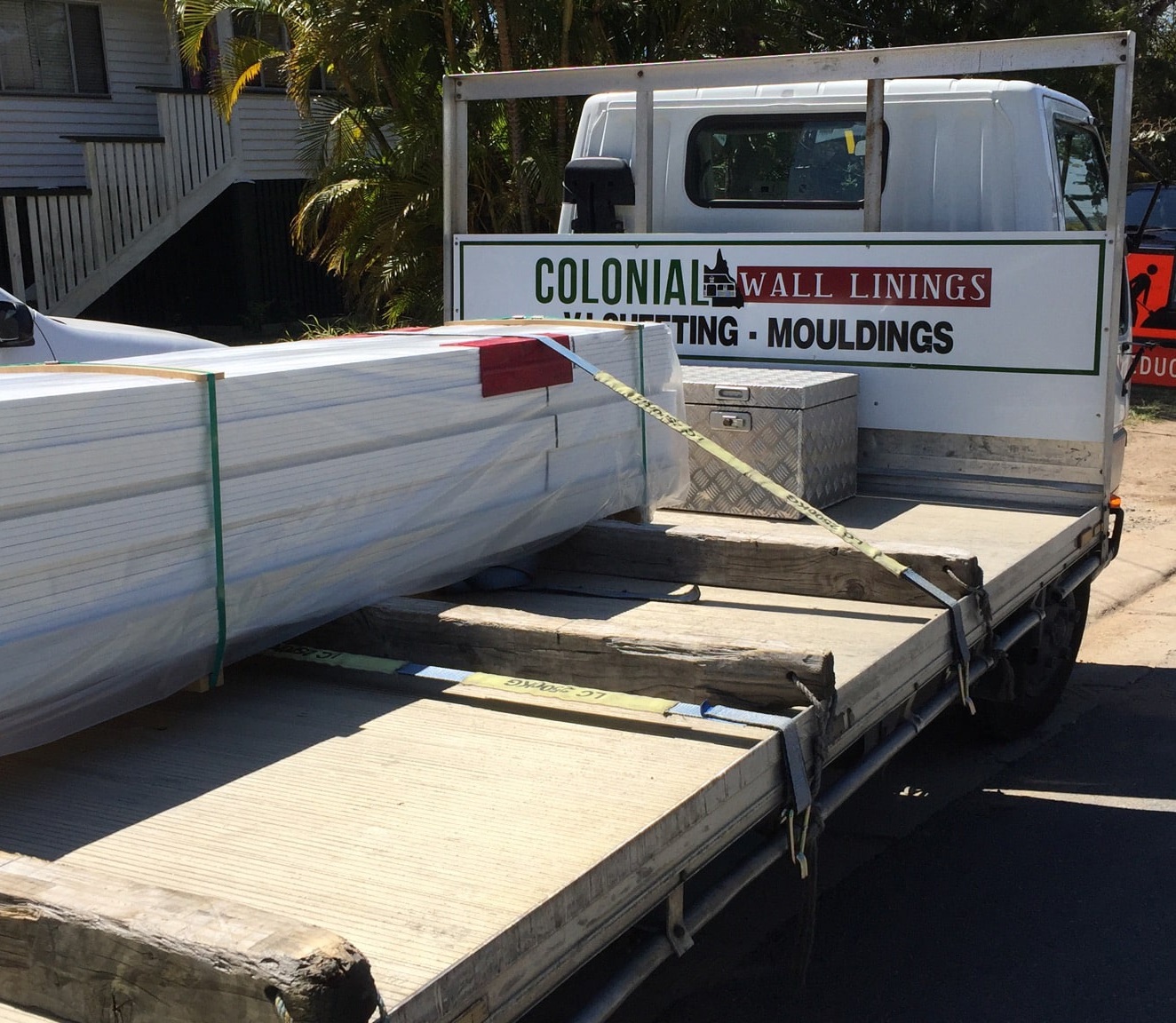
We supply timber mouldings for builders, renovators, designers and construction projects across our service area. Getting the right length, in good condition, and ready to install, matters just as much on a single-room DIY job as it does on a full build.
If you’re not sure which size or profile fits your project, our team can talk it through with you rather than leaving you to work it out from a catalogue alone. Reasons customers keep coming back:
- A team that knows the products, not just the price list
- Timber sourced and supplied with quality and sustainability in mind
- Delivery across Greater Brisbane, the Gold Coast and the Sunshine Coast
- A broad range of timber moulding profiles and sizes
Interior Projects Where This Profile Fits
Because it doesn’t compete visually with anything else in a room, Square Dressed moulding turns up in more places than a decorative profile typically would:
- Skirting along the base of walls
- Architraves framing doors and windows
- Narrow beading and glazing sections
- Panelling, shelving and DIY furniture builds
- Painted trim through renovation projects
- Simple replacement or renovation work where the existing dimensions and profile are suitable
Pair it with a Scotia or Beaded Scotia length where a small amount of shaping is wanted without moving to a fully decorative profile, or run it on its own for a clean, consistent look from room to room.
Getting the Most from Your Timber Order
Timber behaves better when it’s given the chance to. Keep lengths flat, clear of the ground and in a dry location until you’re ready to install, since uneven support or moisture exposure before fixing is one of the more common causes of movement later on.
Check that door frames, window openings and floor lines are square and ready before you start cutting. A sharp blade will give you a cleaner cut than a worn one, and every exposed end should be sealed once it’s fixed, ahead of filling, sanding and painting.
Frequently asked questions
Why choose finger jointed pine over solid timber?
Finger jointed pine is made by joining shorter sections of timber to form longer lengths, helping provide a consistent profile for moulding applications.
What’s the difference between Square Dressed, Scotia and Beaded Scotia?
Square Dressed is a flat, clean-lined profile, while Scotia and Beaded Scotia are smaller, curved profiles usually paired alongside it where a project calls for a bit more detail.
Is this a good option for a DIY project?
Yes. Its flat, square profile is simpler to cut and fit than a more decorative moulding, which makes it a reasonable option for a DIY renovator, though basic carpentry skills and the right tools are still needed for a clean result.
How should lengths be stored before they’re installed?
Flat, dry and off the ground, away from rain and direct weather, until you’re ready to cut and fix them in place.
Can your team help me pick the right size?
Yes. Send through the details of your project, and we’ll help you match the size and profile to what you’re building.
Finishing the Job Without the Guesswork
Every job goes more smoothly when the timber cuts cleanly and holds its shape. Square Dressed Timber Moulding is built for exactly that: a straightforward material that does its job quietly and lets the rest of the room look considered.
If you’re piecing together a full list of skirting, architraves and companion trims for a project, get in touch, and we’ll help you work out what you need.